




1. The Pain Point: Fragmented Screens Slow Down 24/7 Operations
Data centers do not struggle with a lack of data. They struggle with too much of it appearing in too many places at once. When alarms, temperature readings, PUE values, traffic curves and security feeds sit on separate systems, operators waste time switching windows instead of acting on one clear picture.
The source article compares a seamless LED wall with a traditional LCD splicing wall and highlights the main pain points: 3.5-5.5 mm black seams, color drift between units and weaker long-term stability. In a 7x24 environment, those small defects turn into missed details, slower decisions and more screen fatigue.
2. Why Seamless LED Matters More Than a Bigger Screen
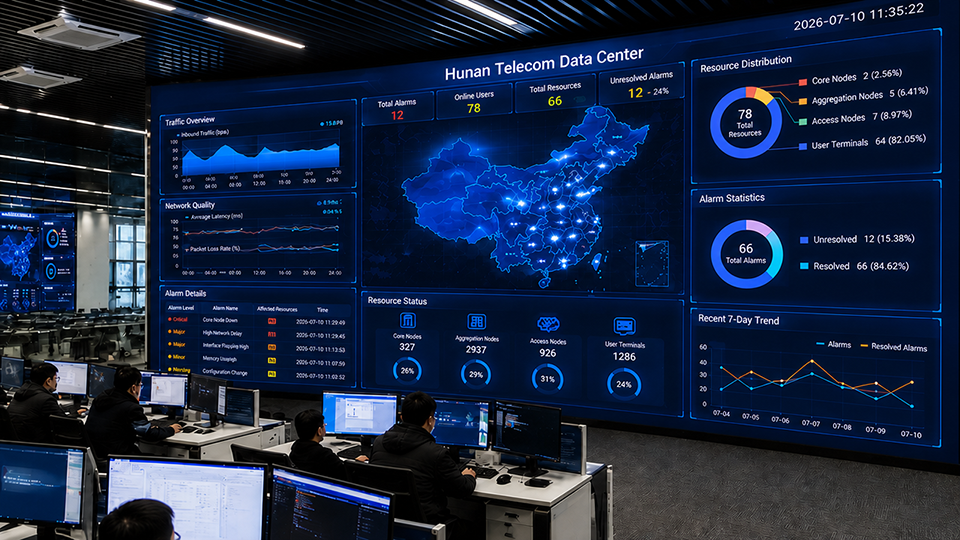
A data center display wall is not there to look impressive. It is there to shorten reaction time. A seamless LED wall keeps alarm cards, topology diagrams, real-time load curves and monitoring video in one continuous surface, so the team can read the whole story in a single glance.
The comparison table in the source file gives the numbers that matter: LED walls offer no physical seam, brightness that can adapt to the environment, and a service life of 100,000 hours or more, while traditional LCD splicing walls are typically listed at 50,000-80,000 hours. That gap matters when the screen is expected to stay on all year.
3. Operational Value: Faster Fault Response, Better Coordination
The biggest return is not visual. It is operational. When multi-source data is unified on one screen, operators stop treating monitoring, IT operations, power data and security feeds as separate tasks. They can immediately focus on what changed, where it changed and what should happen next.
The article also points out that seamless LED supports multi-signal roaming, overlay and segmentation. In practice, that means a fault alert can be enlarged instantly while related camera feeds and trend data stay visible. For shift teams, that reduces the time between detection and action, which is exactly where data-center losses are minimized.
4. Product Fit: Why HD COLOR SLIM INDOOR SERIES Fits Control Rooms
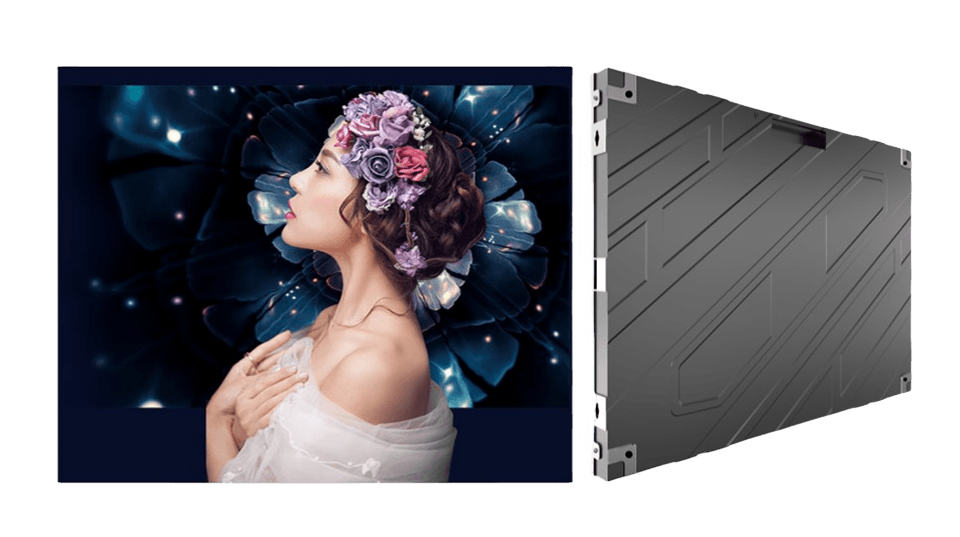
For a data center or operations center, the linked HD COLOR SLIM INDOOR SERIES is a practical fixed-installation option. The product page lists pixel pitch options from P1.25, P1.5 and P1.8 up to P2, P2.5 and P4, which lets buyers match viewing distance and budget rather than overbuying resolution.
The hardware details are equally useful: 44 mm cabinet thickness, 4.5 kg cabinet weight, 320 x 160 mm modules, 640 x 640 mm and 640 x 480 mm cabinet sizes, IP30 rating, die-cast aluminum cabinet, front maintenance and 90-degree splicing support. Those are the kind of details that matter in a real control room retrofit, where space, access and serviceability all matter as much as image quality.
5. Buying Checklist: What to Ask Before You Specify the Wall
A good data-center case starts with practical inputs: wall size, viewing distance, room layout, maintenance access, source systems and whether the wall must support daily command use, visitor demos or both. Those details determine whether the wall should prioritize fine pitch, easier maintenance or flexible splicing.
A strong case also needs supporting data. The source material gives a clear basis for the decision: no seams versus 3.5-5.5 mm LCD gaps, 100,000 hours versus 50,000-80,000 hours, and seamless full-screen display versus segmented panels. That makes the LED wall more than a display choice; it becomes part of the control strategy.
 HD COLOR
 86-15889379986
 HD color