




1. The Real Pain Point: Static Outdoor Ads Are Getting Easier to Ignore
Outdoor printing still works for simple, short-term exposure, but it has a hard ceiling: one static image, slow replacement, weak night visibility and almost no performance data. In busy commercial streets, transport hubs and building facades, brands are not only competing for space; they are competing for seconds of attention.
The source article gives a practical comparison: printed outdoor ads may cost about RMB 280,000-450,000 per year for a 120 sq m site, plus RMB 3,000-8,000 for each artwork replacement. That looks friendly at the beginning, but every new campaign means design, production, installation and waiting time. LED displays cost more upfront, but they turn one location into a flexible media channel.
2. Visibility: Why LED Screens Win in High-Traffic Areas
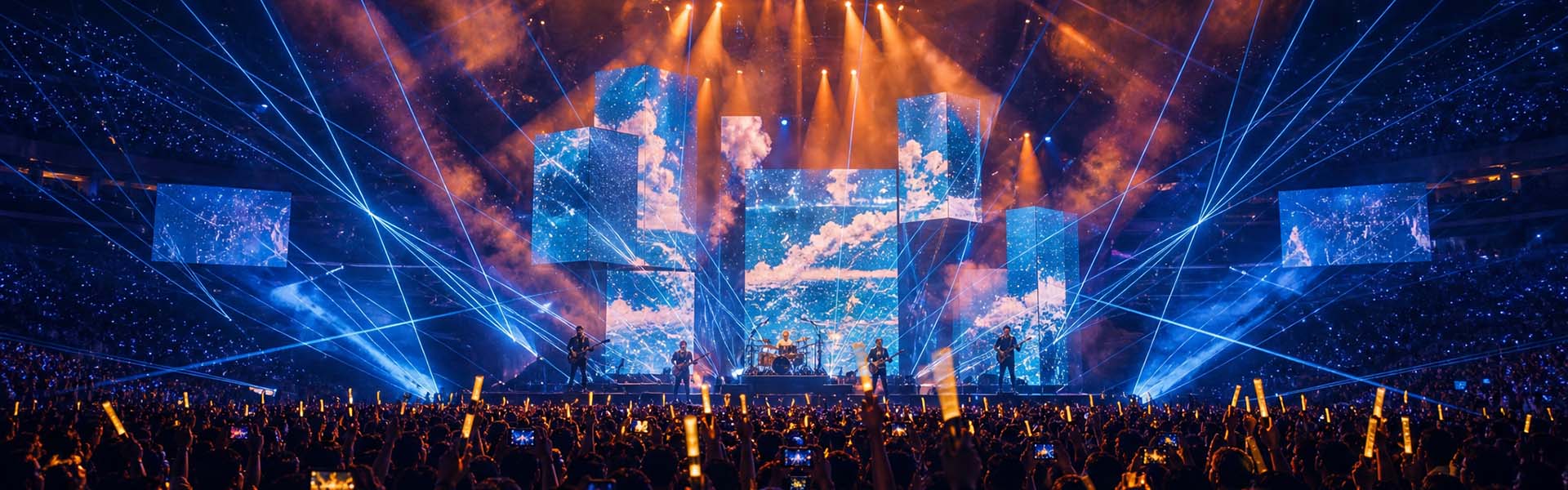
Printed media is static and depends heavily on lighting. LED displays can play video, animation, 3D-style content, time-based campaigns and event-driven messages. The original article notes that outdoor LED brightness can reach 6,000-10,000 nits, which helps content remain visible under strong daylight and stand out at night.
This matters because visual impact is not a vanity metric. The article cites that LED screen campaigns for night-time restaurant promotion achieved 2.7 times the store-visit efficiency of printed ads in the same period, and one commercial-area restaurant saw natural foot traffic rise by about 28% after replacing print with LED. For brands that need traffic and conversion, movement and brightness can directly affect results.
3. Content Flexibility: From One Poster to Many Campaigns
A printed billboard is locked until the next physical replacement. An LED display can switch content in minutes: commuter information in the morning, lunch promotions at noon, brand video at night and event content during holidays. This is why the content replacement cost of LED is close to zero compared with repeated print production and installation.
For long-term advertising positions, LED also makes the business model more flexible. A single display can be split by time slots, content categories or advertisers. Even when a P6 outdoor LED screen of similar area may cost about RMB 550,000-850,000 per year, the article notes that dividing ad slots can reduce the daily cost per brand close to print while delivering stronger exposure.
4. Product Fit: How HD COLOR ENC SERIES Supports Outdoor Advertising
The linked HD COLOR product page identifies the product as ENC SERIES, an indoor and outdoor fixed LED display designed for advertising and sports stadium applications. It uses a slim 960 x 960 mm cabinet and a high-precision CNC die-cast structure, making it suitable for large outdoor LED walls, commercial billboards and venue screens.
The product data is useful for buyers: pitch options include P2.5, P4, P5, P6.67, P8 and P10; refresh rate supports 3840-7680 Hz; customized brightness can reach 10,000 nits; IP65 protection helps resist dust and splashed water; and the cabinet weight is 25 kg, described as 50% lighter than conventional products. It also uses energy-saving driver chips and circuit design to reduce power consumption by 30%-45%.
5. Buying Checklist: When Should You Choose LED Instead of Printing?
Choose LED when the advertising location is in a core business district, a high-traffic road, a transit hub, a shopping mall facade or a night-time consumption area. LED is also the better choice when the campaign needs frequent updates, seasonal promotion, video content, measurable attention data or stronger visual impact.
Before asking for a quotation, prepare the installation location, site photos or videos, available power capacity, target screen size, viewing distance, content format, local outdoor advertising approval documents if required, budget range and expected delivery time. With these details, a supplier can recommend the right pixel pitch, brightness, cabinet structure and maintenance method instead of giving a generic price.
 HD COLOR
 86-15889379986
 HD color